
For decades, high-power signal jammers were associated almost exclusively with military operations. Battlefield countermeasures, convoy protection, and anti-drone defense defined their purpose. Today, however, that picture is changing rapidly.
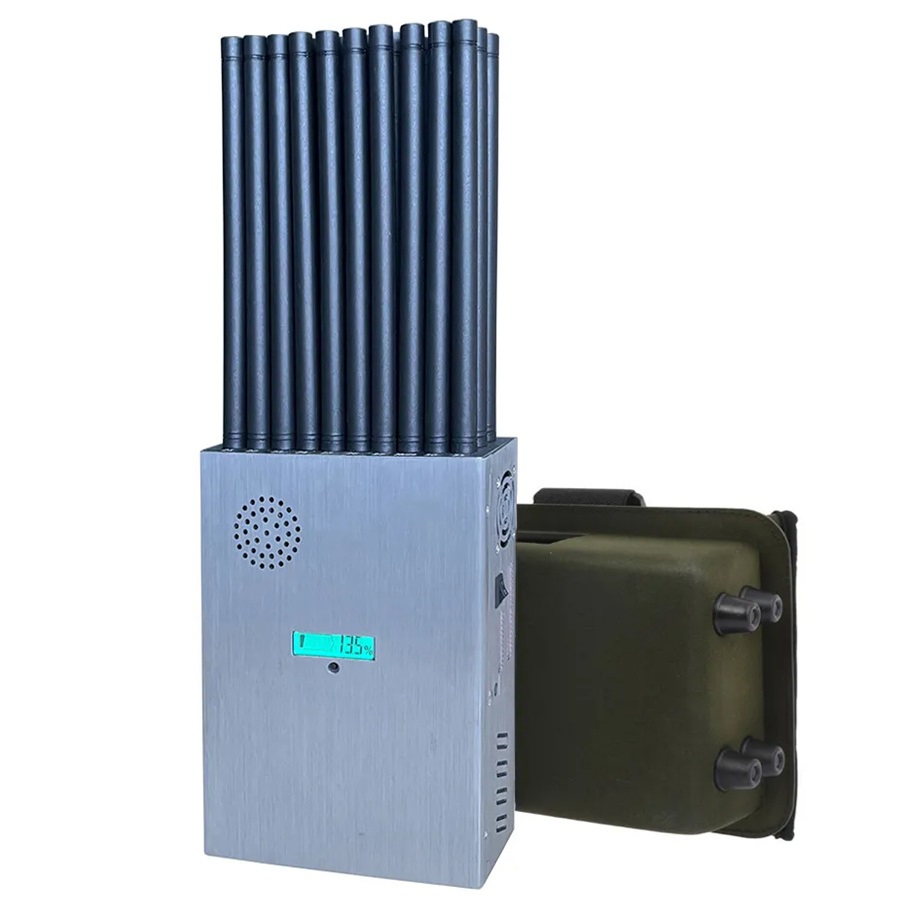
As wireless communication becomes deeply embedded in civilian life, signal jammer-designed for both military-grade reliability and civilian adaptability-are gaining attention far beyond defense circles.
From smartphones and WiFi networks to GPS navigation and unmanned aerial systems, interference technology is increasingly viewed not as disruption, but as controlled protection.
Why Jamming Technology Is No Longer Just Military
Modern society depends on uninterrupted wireless signals. Ironically, that dependence creates vulnerability.
Civilian infrastructures now face risks once limited to military environments:
Key Civilian Applications of High-Power Jammers
Mobile Phone Jammers: Managing Signal Overload
In public venues, exam halls, or confidential facilities, uncontrolled mobile phone usage can compromise privacy and order. Mobile phone jammers allow operators to create temporary signal-managed zones, ensuring focus, safety, or confidentiality.
Rather than targeting individuals, these systems manage the electromagnetic environment itself.
WiFi Jammers: Protecting Local Networks
As WiFi attacks grow more sophisticated, organizations increasingly recognize that encryption alone is not always sufficient.
WiFi signal blockers can:
GPS Jammers: Defending Location Integrity
GPS is now embedded in logistics, transportation, and personal devices. But GPS signals are weak and easily exploited.
Civilian GPS jammers are increasingly deployed to:
Drone Jammers: A New Layer of Airspace Safety
Consumer drones are affordable, powerful-and frequently misused.

Drone jammers are now used around:
From Disruption to Control
A key shift is conceptual. High-power jammers are no longer viewed as blunt instruments. Modern systems feature:
Conclusion
High-power jammers have crossed a threshold. Once confined to military doctrine, they now play a growing role in everyday communication management.
In an era of drone proliferation, location tracking, and wireless vulnerability, controlled interference is no longer extreme-it is strategic, practical, and increasingly necessary.
As wireless communication becomes deeply embedded in civilian life, signal jammer-designed for both military-grade reliability and civilian adaptability-are gaining attention far beyond defense circles.
From smartphones and WiFi networks to GPS navigation and unmanned aerial systems, interference technology is increasingly viewed not as disruption, but as controlled protection.
Why Jamming Technology Is No Longer Just Military
Modern society depends on uninterrupted wireless signals. Ironically, that dependence creates vulnerability.
Civilian infrastructures now face risks once limited to military environments:
- Unauthorized drone surveillance
- Location tracking via mobile networks
- WiFi-based data interception
- GPS spoofing and manipulation
- Mobile phone misuse in restricted areas
Key Civilian Applications of High-Power Jammers
Mobile Phone Jammers: Managing Signal Overload
In public venues, exam halls, or confidential facilities, uncontrolled mobile phone usage can compromise privacy and order. Mobile phone jammers allow operators to create temporary signal-managed zones, ensuring focus, safety, or confidentiality.
Rather than targeting individuals, these systems manage the electromagnetic environment itself.
WiFi Jammers: Protecting Local Networks
As WiFi attacks grow more sophisticated, organizations increasingly recognize that encryption alone is not always sufficient.
WiFi signal blockers can:
- Block unauthorized access attempts
- Prevent covert data exfiltration
- Isolate secure zones during sensitive operations
GPS Jammers: Defending Location Integrity
GPS is now embedded in logistics, transportation, and personal devices. But GPS signals are weak and easily exploited.
Civilian GPS jammers are increasingly deployed to:
- Prevent illicit tracking
- Protect fleet movement privacy
- Counter GPS spoofing threats
Drone Jammers: A New Layer of Airspace Safety
Consumer drones are affordable, powerful-and frequently misused.
Drone jammers are now used around:
- Airports and infrastructure
- Private estates
- Industrial facilities
- Event venues
From Disruption to Control
A key shift is conceptual. High-power jammers are no longer viewed as blunt instruments. Modern systems feature:
- Directional antennas
- Selective frequency targeting
- Adjustable power output
- Modular deployment
Conclusion
High-power jammers have crossed a threshold. Once confined to military doctrine, they now play a growing role in everyday communication management.
In an era of drone proliferation, location tracking, and wireless vulnerability, controlled interference is no longer extreme-it is strategic, practical, and increasingly necessary.


